
The Urethane Blog
July 1, 2026
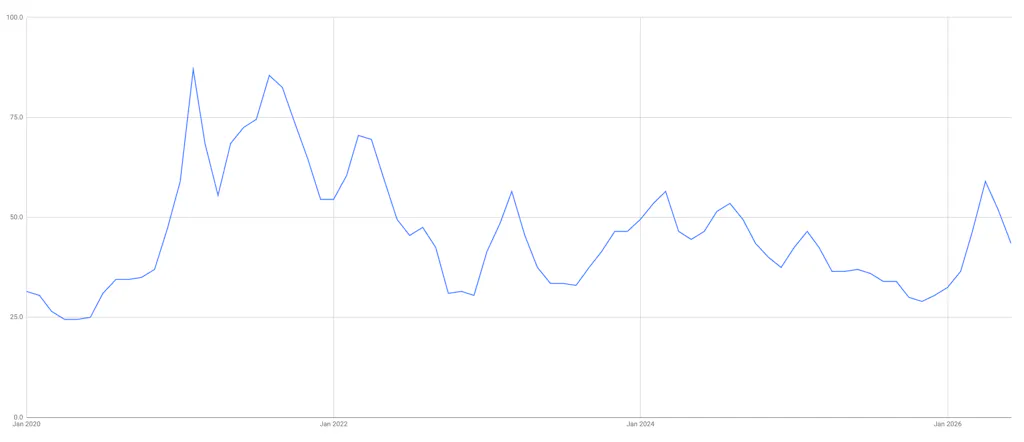
Chemical Grade Propylene is $0.435/lb in June 2026. Down 8.5cpp from May, which was down 7cpp from April.
June 25, 2026
HCFC-141b Ban Enters the Countdown: Is the PU Rigid Foam System About to Change?
June 15, 2026 6 min read
Viewing the Green Upgrade of Rigid Foam Through Blowing-Agent Substitution: Costs, Compliance and Order Thresholds
| Core view: After July 1, the transition window for HCFC-141b in spray polyurethane foam products will close. The policy may not directly lift total demand for PU rigid foam, but it will reshape formulation systems, cost structures and order-entry thresholds for premixed polyols, spray rigid foam and downstream insulation projects. |
As the July 1 deadline approaches, the PU rigid foam industry is reaching an important environmental-compliance watershed. According to Ministry of Ecology and Environment Announcement No. 28 of 2025, from January 1, 2026, the production of premixed polyols and polyurethane products using HCFC-141b as the blowing agent is prohibited, except for spray polyurethane foam products; from July 1, 2026, the production of spray polyurethane foam products using HCFC-141b as the blowing agent will also be prohibited.
This means premixed polyols and most polyurethane products have already entered the ban stage, while spray rigid foam is about to exit its final transition window. For the industry, this is not simply a matter of switching to another blowing agent; it is a system-wide adjustment affecting formulations, production, construction practices and customer compliance requirements.
1. Policy Deadline Nears: Spray Rigid Foam Enters Its Final Transition Window
In terms of policy timing, January 1, 2026 was the first threshold, mainly targeting premixed polyols and polyurethane products that use HCFC-141b as the blowing agent. In principle, premixed-polyol producers, rigid-foam product manufacturers and related polyurethane product companies other than spray foam can no longer continue using HCFC-141b as a blowing agent in production.
The July 1 deadline mainly targets spray polyurethane foam products. Unlike factory-made rigid-foam boards, pipe shells and other products, spray rigid foam is often formed on site. Its applications include building insulation, cold-storage insulation, fishing-vessel insulation, roof waterproofing and insulation, warehouse insulation and some pipeline insulation. Because construction participants are more dispersed, project scenarios are more complex and regulatory chains are longer, the policy previously granted a longer transition period.
Starting July 1, however, this transition window will also close. Spray polyurethane foam products using HCFC-141b as the blowing agent will then be banned from production. For spray-construction companies, premixed-polyol suppliers and downstream project customers, compliance requirements will shift from “gradual switching” to “mandatory switching.”

Figure 1: Key Timeline for the HCFC-141b Ban
2. The Impact Goes Beyond Blowing Agents: Rigid Foam Systems Will Re-segment
HCFC-141b has historically been widely used in PU rigid foam, mainly because of its foaming effect, thermal-insulation performance, process adaptability and cost advantages. However, a rigid-foam system usually consists of premixed polyols, isocyanates, blowing agents, catalysts, flame retardants and surfactants. Once the blowing agent changes, cell structure, thermal conductivity, dimensional stability, flame-retardant performance, construction window, spray adhesion and curing speed may all change accordingly.
Therefore, companies can hardly complete the upgrade by simply replacing HCFC-141b with another blowing agent. They need to readjust formulation systems and construction parameters. Current substitution routes available to the industry include water-blown systems, hydrocarbon blowing agents, HFCs and HFOs. These routes differ in environmental attributes, cost, equipment requirements, safety management and performance stability.
Water-blown systems and some hydrocarbon routes have relative cost advantages, but they place higher demands on formulations, equipment and on-site safety management. Low-GWP routes such as HFOs have stronger environmental attributes but higher costs, making them more suitable in the near term for customers with higher requirements for performance, certification and export compliance. Although HFCs are not ODS, they have already entered a longer-term greenhouse-gas control framework, so companies cannot evaluate substitution routes based only on immediate cost.
This also means the impact of the ban may not necessarily appear as a sudden increase in rigid-foam demand. It is more likely to show up as a re-segmentation of the market structure. Companies with formulation R&D capabilities, experience applying substitute blowing agents, testing capabilities and compliance-document management will be better positioned to take high-standard orders. Smaller companies that compete mainly on low prices and low compliance costs may face greater operating pressure.

Figure 2: Transmission Path of the HCFC-141b Ban Through the PU Rigid Foam Value Chain
From a cost perspective, substitute blowing agents, formulation validation, equipment adaptation, construction training and testing certification will all raise overall costs. However, this cost pressure may not be fully passed downstream. Demand for building insulation, cold-storage construction, insulated pipelines and some industrial insulation is still affected by real estate, infrastructure schedules, investment appetite and project-payment cycles, and end customers remain price-sensitive.
A more realistic judgment is therefore that the ban itself may not significantly expand total rigid-foam demand, but it will change order structure and profit distribution. Products that are highly compliant, high-performing and traceable may gain stronger bargaining power, while low-priced, opaque products that cannot prove the source of their blowing agents may gradually be excluded from key projects, branded customers and standardized construction scenarios. Environmental regulation will not create demand out of thin air, but it will raise the threshold for entering order systems.
3. Corporate Response Priorities: From Inventory Switching to a Closed Compliance Loop
Premixed-polyol companies are a critical link in this adjustment. Downstream foam companies and construction firms do not necessarily purchase single-component blowing agents directly; instead, they buy premixed-polyol systems that already contain the blowing agent. As a result, premixed-polyol companies are not only formulation providers but also key nodes in the chain of compliance responsibility.
After July 1, the room for HCFC-141b-containing systems to continue flowing into the spray-foam sector will basically close. Premixed-polyol companies need to focus on three issues: first, how to compliantly dispose of existing HCFC-141b-containing inventory; second, whether substitute blowing-agent systems can meet downstream construction and performance requirements; and third, whether contracts, labels, quality-inspection reports, blowing-agent declarations and customer filing materials can form a complete closed loop.
The spray-construction side also needs to upgrade in parallel. The special feature of spray PU rigid foam is on-site formation: construction environment, temperature and humidity, spray thickness, equipment pressure and operator practices all affect final quality. After blowing-agent substitution, construction companies need to become familiar with the operating window of the new system to avoid foam shrinkage, hollow spots, fluctuations in thermal performance, insufficient interlayer adhesion or higher on-site losses.

Figure 3: Response Checklist for Premixed-Polyol and Rigid-Foam Companies Before July 1
In the short term, companies should focus on three tasks: first, complete inventory checks as soon as possible, distinguishing standalone HCFC-141b, HCFC-141b-containing premixed polyols, orders in transit and project inventory; second, complete substitute-system validation and verify performance across scenarios such as cold storage, building insulation, fishing-vessel insulation and pipeline insulation; and third, improve compliance-document management by retaining procurement, sales, filing, test reports, blowing-agent declarations and contract clauses to reduce subsequent traceability risk.
Overall, the HCFC-141b ban entering the July 1 countdown marks a more thorough stage of blowing-agent substitution in the PU rigid foam industry. In the short term, it may bring higher costs, formulation adjustments and construction-adaptation pressure. In the long term, however, it will push the industry away from low-price competition and toward competition based on technology, compliance and service capabilities.
The PU rigid foam market may not expand rapidly because of one ban, but the rules of competition are changing. After July 1, rigid-foam companies will compete not only on price, but also on whether they can prove their products are more environmentally friendly, more stable and more compliant. This may be the deepest impact of the HCFC-141b ban on the polyurethane industry.
Sources: Ministry of Ecology and Environment Announcement No. 28 of 2025 and related policy Q&A; China Polyurethane Industry Association, Regulations on Ozone-Depleting Substances and Compliance Operations for Polyurethane Enterprises.
June 22, 2026
We Liked Remote Work. Then We Looked at the Data.

Most Americans say they love working from home. They can skip their commutes, dodge their snippy co-workers and evade their micromanaging bosses. In 2024, nearly 80 percent of workers said they would be happiest if they could work remotely.
Both of us have experienced the advantages of remote work, especially when battling morning sickness or caring for a sick 6-year-old. But on some days, we wouldn’t venture outside or speak face-to-face with another human. We started to wonder whether we — along with the roughly 35 million other Americans who work from home — had stepped into an enormous social experiment. Was remote work as liberating as it felt?
We searched for answers in troves of data, unsure of what we would find. Surveys of over half a million Americans from the last decade and a half revealed an uncomfortable truth: Despite its advantages, remote work has significantly deepened Americans’ isolation and distress. Our estimates, published in Science this month with our collaborator Amanda Pallais, indicate that remote work explains a third of the deterioration in mental health over the last 15 years. Our research doesn’t suggest that work can occur only in the office. But it does mean that employees and companies should make a greater effort to prioritize face-to-face time with colleagues.
Our study compares workers in jobs that could be done remotely, such as finance and software engineering, to workers in jobs that must be done in person. People in remote-capable jobs worked from home three times more often in 2024 than in 2019. As they did, their days became far more solitary. Eighty-four percent of remote workers spend their workday entirely alone. Over half report feeling less connected to their colleagues. Even when communicating online, people working from home receive less feedback from their co-workers and contact fewer people outside their immediate teams.
These workers did not compensate by socializing more outside of work. More days passed with no social contact of any kind. No hello from an office mate, no idle chitchat with a barista, no nod to a fellow commuter. These lost interactions are not trivial. In one study, when commuters were instructed to connect with a stranger near them, they reported being happier than those who continued in silence as usual, much to their own surprise.
With fewer social encounters, workers in jobs that can be remote saw steeper increases in distress, mental health visits and prescriptions for antidepressants than other workers did. This increase in depression does not seem to reflect more recent fears, such as A.I. displacement. It began in 2020 and has not abated, which points to remote work as the driving force.
The pain was not evenly shared. People who lived with their spouse and kids saw their mental health hold fairly steady, while those who lived alone experienced a 20 percent decrease in mental well-being. Overall, we found that the rise of remote work increased distress by 7 percent, which accounts for a third of the total increase from 2011 to 2024.
So why do so many people like remote work, even saying they would accept pay cuts of 4 percent to 10 percent to keep it? One reason is that remote work’s costs are subtle and slow. When loneliness sets in gradually, it is natural to blame other life changes: a new job, a breakup, a fight with a friend, aging. Another reason that some people like remote work is that a half-empty office is not an attractive alternative.
We don’t need to accept this new status quo. The office has been the No. 1 place adults form friendships, outranking houses of worship, children’s schools, neighborhoods and sports teams. Forming and sustaining these friendships almost always requires in-person time: Our brains are wired to connect face-to-face, and even the most advanced digital tools are a poor substitute. To maintain this critical source of connection, workers need doses of in-person time with one another.
Yet the prepandemic norm of being in the office every hour of every workday often crowded out time with friends and family. So, for many of us, the solution is not to rewind the clock to our 2019 ways. Instead, we can form strong bonds by being more intentional about how we work.
Employees can take the initiative to invite colleagues to lunch or organize a happy hour. Of course, structural issues may limit what they can do, especially if some of their colleagues live halfway across the country. And often, individuals’ efforts go unrewarded.
But employers can make it easier to connect. In researching a forthcoming book, we found companies rethinking how to bring people together. Some revamped performance reviews to better reward the too-often invisible work of connecting teams. Others reorganized coffee spaces, replacing atomized coffee machines with centralized hubs that brought colleagues together. Some turned managers into mentor matchmakers setting up weekly one-on-ones for co-workers to analyze their recent wins and frustrations. Such interventions can foster lasting connections, give employees new skills and improve companies’ bottom lines.
Twenty-six years after Robert Putnam warned that Americans were bowling alone, many of us are now typing alone. To ensure that work remains a source of connection, we must change not only where we work, but how we work, so that our jobs continue to bring us together.
Natalia Emanuel and Emma Harrington are labor economists and authors of the forthcoming book “In Person: How Working Together Fuels Creativity, Productivity, and Growth.”
June 17, 2026
How The World Added Decades To Life Expectancy
by Tyler Durden
Monday, Jun 15, 2026 – 07:40 PM
The average person today can expect to live far longer than someone born in 1960, regardless of where they live.
This chart, via Visual Capitalist’s Bruno Venditti, tracks life expectancy at birth across four World Bank income groups. While high-income countries still have the longest lifespans, the biggest gains have come elsewhere. Upper-middle income countries have added more than three decades to life expectancy, while low-income countries have made substantial progress as well.

The data for this visualization comes from World Bank via FRED. It tracks life expectancy at birth by income group from 1960 to the latest available data (2024).
High-Income Countries Still Lead
High-income countries still have the highest life expectancy, reaching 80.3 years in 2024.
That is up from 68.3 years in 1960, a gain of 12 years. These countries started from a much higher baseline, meaning their gains have been slower but still substantial.
Examples include the U.S., Germany, and Japan.

Upper-Middle Income Countries Saw the Fastest Gains
Upper-middle income countries posted the largest increase, rising from 41.9 years in 1960 to 76.3 years.
That is a gain of 34.4 years, the fastest improvement of any group in the dataset. This category includes countries such as China, Brazil, Mexico, and South Africa.
Much of this improvement coincided with rising incomes, better sanitation, expanded vaccination programs, lower child mortality, and broader access to healthcare. Together, these changes helped push life expectancy in many middle-income countries toward levels once seen only in the world’s wealthiest economies.
The Global Life Expectancy Gap Has Narrowed
In 1960, people in high-income countries lived about 27 years longer than those in low-income countries.
Today, the gap stands at roughly 16 years. While a significant difference remains, low-income countries have added more than 23 years to average life expectancy since 1960. In other words, much of the world’s longevity progress has come from countries that started furthest behind.
However, the remaining gap shows that income, healthcare access, and living conditions continue to shape longevity worldwide.
Editor’s note: I was born in 1959!
Haha
https://www.zerohedge.com/medical/how-world-added-decades-life-expectancy
June 17, 2026
Huntsman Corporation (HUN) M&A Call Transcript
Jun 16, 2026, 11:02 AM ETHuntsman Corporation (HUN) Stock
Huntsman Corporation (HUN) M&A Call June 16, 2026 8:00 AM EDT
Company Participants
Steve Keenan – Director of Investor Relations
Kenneth Lane – President, CEO & Director
Peter Huntsman – Chairman, President & CEO
Philip Lister – Executive VP & CFO
Steve Keenan
Director of Investor Relations
Thanks, Chelsea, and welcome, everyone. I’m joined on the call today by Ken Lane, President and Chief Executive Officer of Olin; and Peter Huntsman, Chairman, President and Chief Executive Officer of Huntsman. Todd Slater, Olin’s Senior Vice President and Chief Financial Officer; and Phil Lister, Huntsman’s Executive Vice President and Chief Financial Officer, will participate in the Q&A portion of today’s call. Before we begin, I’d like to remind everyone that today’s discussion regarding Olin and Huntsman includes forward-looking statements, including expectations regarding the proposed transaction. These statements are subject to risks and uncertainties, and we encourage you to review our related SEC filings for more detail. I would now like to turn the call over to Ken.
Kenneth Lane
President, CEO & Director
Thank you, Steve, and good morning, everyone. I appreciate you joining us. Today is a momentous one for Olin and Huntsman, two storied American companies with a shared commitment to safety, integrity, operational excellence and serving customers around the world, all while creating value for our shareholders. .
The all-stock merger of equals we announced this morning will create a greater than $12 billion chemicals leader with a strong North American anchor and complementary European and Asian portfolios. By integrating Olin’s strong upstream manufacturing and feedstock position with Huntsman’s differentiated downstream capabilities, we will have a world-scale, vertically integrated platform that is better positioned to serve customers and deliver resilient financial performance.
The combined portfolio also creates tangible integration opportunities across key value chains, supporting a lower cost position through the cycle. These strategic tailwinds are paired with more than $400 million of cost synergies and integration benefits. The combined business will have strong cash flow to support disciplined capital allocation including near-term deleveraging, returning capital to shareholders and investing in high-return growth projects.
I’ve spent my career in chemicals across both commodity and downstream businesses, including running a global polyurethanes business. I understand how to get the best out of these businesses in many respects, that means running them as complementary, but separate, and I’m confident we can do that while also delivering on the benefits of this transaction.
Olin’s stated strategy is to focus on strengthening our core businesses, maximizing valuations where we can achieve attractive returns through innovation and operational improvements. This transaction hits those marks. Further, as Olin Huntsman will be led by a team with the right experience and shared foundational values to ensure we are capturing all the opportunities available to us.
I’d now like to turn it over to Peter Huntsman to walk through the transaction structure and combined platform in greater detail. But before I do, I’ll take a moment to recognize Olin’s dedicated employees whose commitment and focus has made today’s milestone possible. I’m very proud to be part of the Olin team. I’d also like to acknowledge Peter and his team. As you might expect, over the course of reaching this agreement, Peter and I have spent a good deal of time together. It’s been clear what a world-class team Huntsman also has with great expertise, and most importantly, truly held values that we at Olin share.
Peter, I’m looking forward to working with you and the other directors of the Board. I know OlinHuntsman is going to do great things.
Peter Huntsman
Chairman, President & CEO
Ken, thank you very much. Good morning, everyone, and thank you for taking the time to join us. It is an honor to be here today, and I echo Ken’s enthusiasm for the opportunities ahead. As our industry continues to globalize, we compete more today against countries than companies, trade policies and global supply chains more than ever before. The opportunities this merger creates enables us to generate greater value for our shareholders, delivers exceptional services and products for our customers and provide greater opportunities and stabilities for our associates. This merger of equals takes 2 great companies and create a much stronger global leader.
So let me provide some further detail. Let’s turn to Slide #5. We have structured this combination as an all-stock merger of equals, which we believe capitalizes on the strength of both companies and present the best value creation opportunities for both sets of shareholders. Under the terms of the agreement, Huntsman shareholders will receive 0.576 shares of Olin for each Huntsman share they own, resulting in Olin shareholders owning approximately 54.5% and Huntsman shareholders owning approximately 45.5% of the combined company. The combined company will be named OlinHuntsman Corporation and will be headquartered in the Woodlands, Texas.
As Ken mentioned, we have identified more than $400 million of cost synergies and integration benefits. Our respective teams have spent a great deal of time together identifying and validating these synergies, and Ken will provide greater detail on how we will achieve them later in this presentation. The transaction is expected to close in the first half of 2027, subject to receipt of regulatory approvals and satisfaction of other customary closing conditions, including approval from both Olin and Huntsman shareholders. Following the close, I will serve as Non-Exec Chairman of the Board of Directors, and Ken will assume the role of Chief Executive Officer. Phil Lister, will serve as Chief Financial Officer; and Todd Slater, will serve as the Chief Integration Officer.
Let’s turn to Slide #6. Let me spend a moment on the scale and benefits of the combined company. Using 2025 reported financials on a pro forma basis, the combined company would have generated approximately $12.5 billion in revenue and approximately $1.3 billion of adjusted EBITDA, including expected cost synergies. We will be anchored in cost advantage in North American assets and feedstocks with integrated portfolios that create multiple channels for improved economics and value creation across a broad range of attractive end markets. We also have identified opportunities in Europe that capitalize on our integration and downstream capabilities. With Huntsman’s relationships in these global end markets, we have a unique opportunity to deliver for our customers more profitably by leveraging Olin assets to improve efficiency across the value chain.
We can turn to Slide #7. Our industry has changed a lot over the last 5 years. Cost position, reliability and integration matters more than ever. That is why I believe this type of integration is essential to driving optionality and higher profitability now and into the future. You see on Slide 7, Olin brings advantaged upstream leadership, including an efficient cost position from U.S. Gulf Coast economics and world-scale chemical assets. Huntsman brings downstream application expertise, including leading positions in MDI and polyurethane systems ride and advanced materials, supported by deep end-market customer relationships. Put simply, we believe this combination will drive value creation for our shareholders and unlock greater profitability.
So looking at Slide 8, there is a clear indication of how integration creates value for both companies across several key value chains. The combination brings together selected Olin and Huntsman capabilities across electrochemical units to polyurethanes, electrochemical units to amines and to epoxies. Olin is strong at the front end of the value chain with the ability to make chlorine and caustic soda safely, reliably and at world scale. Huntsman is strong downstream, particularly in polyurethanes, amines, advanced materials and formulation-driven applications. By combining these capabilities, we create more reliability and better integrated supply chains capable of generating greater value to shareholders and customers.
For example, today, Olin has several existing outlets for chlorine, including vinyls, epoxy, water treatment, chlorinated organics, merchant chlorine and hydrochloric acid. Through the combination, OlinHuntsman will have additional outlets across polyurethanes, amines and advanced materials broadening participation across the value chain. It also creates a vertically integrated U.S. MDI producer. Starting in 2031 as current supply contracts expire, we expect to add an additional $100 million or more of incremental synergies. The result is a more closely integrated set of chlorine-linked value chains that benefits both businesses and positions the combined company for future downstream opportunities across high-growth end markets.
Before turning our concluding comments back to Ken, I’d like to comment that from the first meeting nearly 4 months ago, we have both seen this as a merger of opportunities where the sum of the parts create greater benefits than both companies remaining separate. I have found in Ken, a leader that shares a vision and the capability to create greater value and opportunity in this merger. Ken?
Kenneth Lane
President, CEO & Director
Thank you, Peter. The expected cost synergies and integration benefits from this combination are significant and actionable. The companies have identified more than $400 million of value with clear line of sight. Of that, we see $300 million of synergies with much of that achieved in the first 24 months following close. These synergies are expected to come from several areas, including purchasing and raw materials integration, optimization of operations and SG&A savings.
As we’ve said, we also expect to capture more value internally with more than $100 million of additional raw material integration benefits in 2031 due to expiring contracts and Olin stepping in to fill supply. We expect the cost to achieve these synergies to be approximately $150 million to $200 million.
In addition, OlinHuntsman is expected to benefit from approximately $125 million of cash tax benefits from acceleration of tax NOLs, which is not included in the synergy figure. Both Olin and Huntsman have executed complex integrations before, including the Dow Chlorine Products business, where Olin delivered more synergies than originally announced, and Huntsman’s track record of integrating multiple acquisitions of different sizes and complexity over the years. We’ll bring that same discipline and accountability to this combination.
OlinHuntsman is expected to have improved profitability and cash flow through the cycle. As we mentioned earlier, despite a challenging market backdrop on a 2025 pro forma basis, OlinHuntsman would have generated over $900 million of adjusted EBITDA. When including the expected synergies of $400 million, the combined company would have generated approximately $1.3 billion of adjusted EBITDA.
Looking across the 2021 to 2025 period on a pro forma basis, OlinHuntsman would have generated approximately $2.7 billion of average adjusted EBITDA, including the $400 million of synergies. We believe this shows the capability of the combined company to deliver compelling profitability, substantial free cash flow and importantly, greater resilience across varying operating environments.
On the following slide, we provide some more detail on the pro forma financial profile of the business. We expect to have a healthy balance sheet with an evenly weighted maturity profile, no bond maturities before 2029, and an attractive blended cost of debt of approximately 5%. Pro forma year-end 2025 net leverage would have been 4.6 times or approximately 3.2 times with full synergy implementation. And as mentioned earlier, one of our initial priorities for our free cash flow will be to deleverage.
Beyond deleveraging, our cash flow will be an engine of shareholder value creation. First, maintenance capital. We expect to invest approximately $400 million per year on a combined basis to ensure safe and reliable operations. Second, the dividend. We expect to continue a stable dividend policy supported by resilient through-cycle cash flows of the combined company. And with excess cash, we’ll prioritize returning cash to shareholders and pursuing growth projects that meet a high return threshold.
To summarize, this combination is a compelling opportunity for both sets of shareholders today and into the future. Together, Olin and Huntsman will create a greater than $12 billion North American chemicals leader that will better serve customers across diverse and growing end markets. The combination creates a vertically integrated platform with a structurally lower cost position. We’ll approach integration with discipline, including how we segment and manage the combined company so that integrated manufacturing and downstream businesses can each succeed.
OlinHuntsman will benefit from a highly experienced management team with a shared focus on value creation. This strategic combination creates greater resilience, stronger cash generation and a balance sheet that will open multiple avenues for creating value for our shareholders.
Jeffrey Zekauskas
JPMorgan Chase & Co, Research Division
What are the cash costs of achieving the synergies? And for Peter, Huntsman may have had the possibility of combining with an MDI producer. Why was it better over a longer period of time to not wait and look for an MDI opportunity rather than to merge in more of a diversification transaction?
Peter Huntsman
Chairman, President & CEO
Jeff, excellent question. I think that as we look at the MDI industry, I think that you’re probably limited to some degree with various antitrust issues on a global basis. But more importantly than just MDI, which is certainly an important part of our company, but it is certainly not the entirety of our company. And as we look at a transaction that is going to impact our downstream advanced materials, our amines, our MDI, really across the entire supply chain, this has a much greater impact on that than I think just adding more MDI tonnage, being able to have a very competitive North American cost advantage, being able to have integration opportunity in Europe.
And I think that as we look at the growing markets in Asia for both companies, we see opportunities there to leverage existing contracts, existing customer relationships and so forth. So I think there probably would be a space there for an expansion in MDI. But as I look across the board, again, across what is going to have the greatest impact for creating shareholder value across the board, this would have a much greater impact.
 Everchem Updates Archive
  Sign Up for Email Updates
