
The Urethane Blog
July 5, 2026
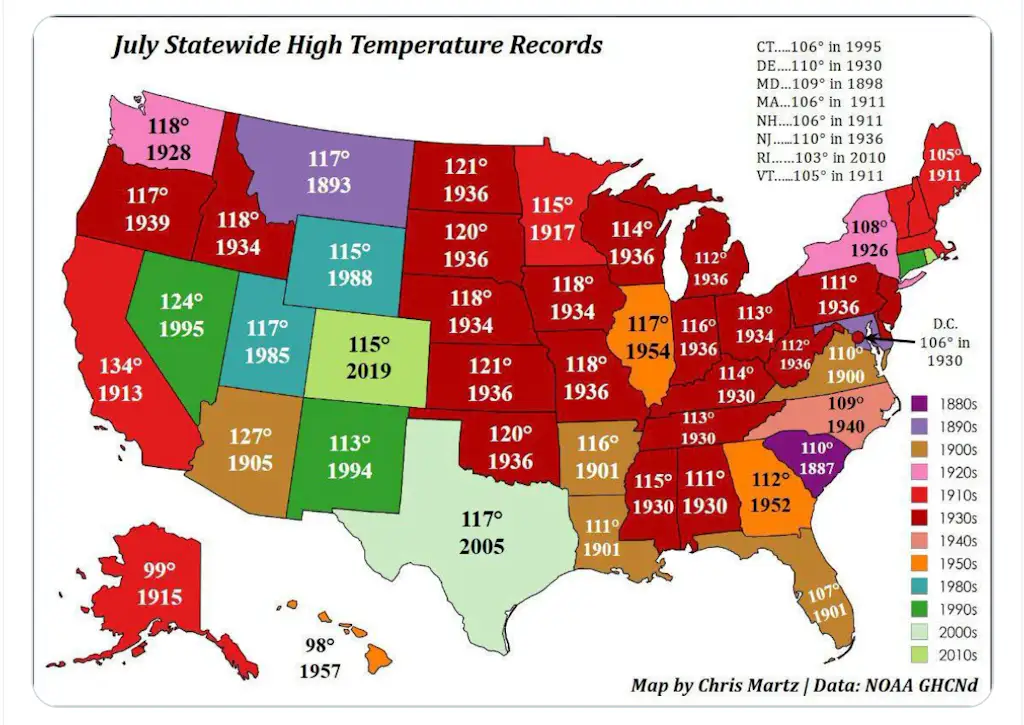
The 1930s were hot–dust bowl days!
July 2, 2026
FOMEX fire causes evacuations in Cuautitlán Izcalli
A fire at the FOMEX company mobilizes emergency forces in Cuautitlán Izcalli, generating evacuations and security measures to protect the community. Sunday, June 28, 2026 08:33 hrs.

Translated by AI
During the early hours of Sunday, a strong fire was recorded in the company FOMEX, located in the community of San Mateo Ixtacalco, Cuautitlán Izcalli, State of Mexico. The flames, visible from several kilometers, generated an intense mobilization of Firefighters and Civil Protection, who worked to quell the fire and prevent its spread to nearby properties.
Neighbors alerted authorities to the crash, which quickly spread, leading to the evacuation of several factories in the area. So far, the cause of the fire and if there are people injured is unknown. Civil Protection recommended that the population stay away from the affected area to prevent further risks.
In the coming hours, city and state authorities are expected to issue an official statement with detailed information about the incident and the security measures that will be implemented to ensure community protection.
July 1, 2026
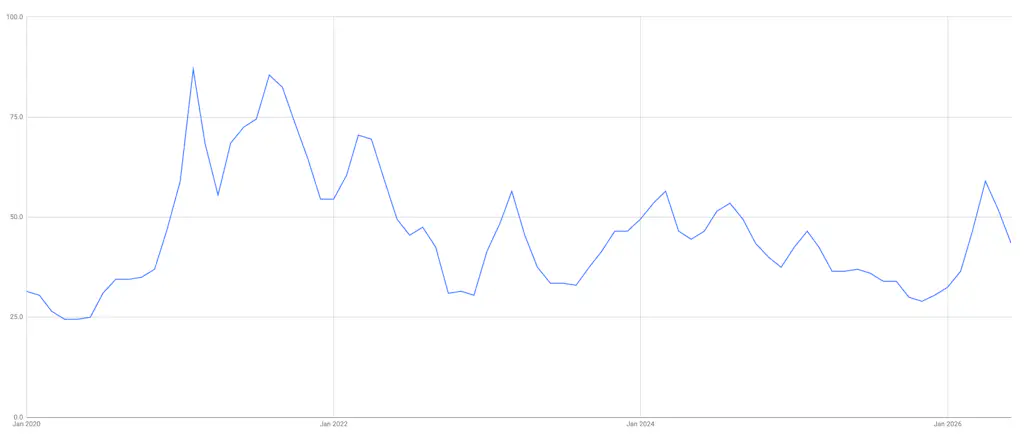
Chemical Grade Propylene is $0.435/lb in June 2026. Down 8.5cpp from May, which was down 7cpp from April.
June 25, 2026
HCFC-141b Ban Enters the Countdown: Is the PU Rigid Foam System About to Change?
June 15, 2026 6 min read
Viewing the Green Upgrade of Rigid Foam Through Blowing-Agent Substitution: Costs, Compliance and Order Thresholds
| Core view: After July 1, the transition window for HCFC-141b in spray polyurethane foam products will close. The policy may not directly lift total demand for PU rigid foam, but it will reshape formulation systems, cost structures and order-entry thresholds for premixed polyols, spray rigid foam and downstream insulation projects. |
As the July 1 deadline approaches, the PU rigid foam industry is reaching an important environmental-compliance watershed. According to Ministry of Ecology and Environment Announcement No. 28 of 2025, from January 1, 2026, the production of premixed polyols and polyurethane products using HCFC-141b as the blowing agent is prohibited, except for spray polyurethane foam products; from July 1, 2026, the production of spray polyurethane foam products using HCFC-141b as the blowing agent will also be prohibited.
This means premixed polyols and most polyurethane products have already entered the ban stage, while spray rigid foam is about to exit its final transition window. For the industry, this is not simply a matter of switching to another blowing agent; it is a system-wide adjustment affecting formulations, production, construction practices and customer compliance requirements.
1. Policy Deadline Nears: Spray Rigid Foam Enters Its Final Transition Window
In terms of policy timing, January 1, 2026 was the first threshold, mainly targeting premixed polyols and polyurethane products that use HCFC-141b as the blowing agent. In principle, premixed-polyol producers, rigid-foam product manufacturers and related polyurethane product companies other than spray foam can no longer continue using HCFC-141b as a blowing agent in production.
The July 1 deadline mainly targets spray polyurethane foam products. Unlike factory-made rigid-foam boards, pipe shells and other products, spray rigid foam is often formed on site. Its applications include building insulation, cold-storage insulation, fishing-vessel insulation, roof waterproofing and insulation, warehouse insulation and some pipeline insulation. Because construction participants are more dispersed, project scenarios are more complex and regulatory chains are longer, the policy previously granted a longer transition period.
Starting July 1, however, this transition window will also close. Spray polyurethane foam products using HCFC-141b as the blowing agent will then be banned from production. For spray-construction companies, premixed-polyol suppliers and downstream project customers, compliance requirements will shift from “gradual switching” to “mandatory switching.”

Figure 1: Key Timeline for the HCFC-141b Ban
2. The Impact Goes Beyond Blowing Agents: Rigid Foam Systems Will Re-segment
HCFC-141b has historically been widely used in PU rigid foam, mainly because of its foaming effect, thermal-insulation performance, process adaptability and cost advantages. However, a rigid-foam system usually consists of premixed polyols, isocyanates, blowing agents, catalysts, flame retardants and surfactants. Once the blowing agent changes, cell structure, thermal conductivity, dimensional stability, flame-retardant performance, construction window, spray adhesion and curing speed may all change accordingly.
Therefore, companies can hardly complete the upgrade by simply replacing HCFC-141b with another blowing agent. They need to readjust formulation systems and construction parameters. Current substitution routes available to the industry include water-blown systems, hydrocarbon blowing agents, HFCs and HFOs. These routes differ in environmental attributes, cost, equipment requirements, safety management and performance stability.
Water-blown systems and some hydrocarbon routes have relative cost advantages, but they place higher demands on formulations, equipment and on-site safety management. Low-GWP routes such as HFOs have stronger environmental attributes but higher costs, making them more suitable in the near term for customers with higher requirements for performance, certification and export compliance. Although HFCs are not ODS, they have already entered a longer-term greenhouse-gas control framework, so companies cannot evaluate substitution routes based only on immediate cost.
This also means the impact of the ban may not necessarily appear as a sudden increase in rigid-foam demand. It is more likely to show up as a re-segmentation of the market structure. Companies with formulation R&D capabilities, experience applying substitute blowing agents, testing capabilities and compliance-document management will be better positioned to take high-standard orders. Smaller companies that compete mainly on low prices and low compliance costs may face greater operating pressure.

Figure 2: Transmission Path of the HCFC-141b Ban Through the PU Rigid Foam Value Chain
From a cost perspective, substitute blowing agents, formulation validation, equipment adaptation, construction training and testing certification will all raise overall costs. However, this cost pressure may not be fully passed downstream. Demand for building insulation, cold-storage construction, insulated pipelines and some industrial insulation is still affected by real estate, infrastructure schedules, investment appetite and project-payment cycles, and end customers remain price-sensitive.
A more realistic judgment is therefore that the ban itself may not significantly expand total rigid-foam demand, but it will change order structure and profit distribution. Products that are highly compliant, high-performing and traceable may gain stronger bargaining power, while low-priced, opaque products that cannot prove the source of their blowing agents may gradually be excluded from key projects, branded customers and standardized construction scenarios. Environmental regulation will not create demand out of thin air, but it will raise the threshold for entering order systems.
3. Corporate Response Priorities: From Inventory Switching to a Closed Compliance Loop
Premixed-polyol companies are a critical link in this adjustment. Downstream foam companies and construction firms do not necessarily purchase single-component blowing agents directly; instead, they buy premixed-polyol systems that already contain the blowing agent. As a result, premixed-polyol companies are not only formulation providers but also key nodes in the chain of compliance responsibility.
After July 1, the room for HCFC-141b-containing systems to continue flowing into the spray-foam sector will basically close. Premixed-polyol companies need to focus on three issues: first, how to compliantly dispose of existing HCFC-141b-containing inventory; second, whether substitute blowing-agent systems can meet downstream construction and performance requirements; and third, whether contracts, labels, quality-inspection reports, blowing-agent declarations and customer filing materials can form a complete closed loop.
The spray-construction side also needs to upgrade in parallel. The special feature of spray PU rigid foam is on-site formation: construction environment, temperature and humidity, spray thickness, equipment pressure and operator practices all affect final quality. After blowing-agent substitution, construction companies need to become familiar with the operating window of the new system to avoid foam shrinkage, hollow spots, fluctuations in thermal performance, insufficient interlayer adhesion or higher on-site losses.

Figure 3: Response Checklist for Premixed-Polyol and Rigid-Foam Companies Before July 1
In the short term, companies should focus on three tasks: first, complete inventory checks as soon as possible, distinguishing standalone HCFC-141b, HCFC-141b-containing premixed polyols, orders in transit and project inventory; second, complete substitute-system validation and verify performance across scenarios such as cold storage, building insulation, fishing-vessel insulation and pipeline insulation; and third, improve compliance-document management by retaining procurement, sales, filing, test reports, blowing-agent declarations and contract clauses to reduce subsequent traceability risk.
Overall, the HCFC-141b ban entering the July 1 countdown marks a more thorough stage of blowing-agent substitution in the PU rigid foam industry. In the short term, it may bring higher costs, formulation adjustments and construction-adaptation pressure. In the long term, however, it will push the industry away from low-price competition and toward competition based on technology, compliance and service capabilities.
The PU rigid foam market may not expand rapidly because of one ban, but the rules of competition are changing. After July 1, rigid-foam companies will compete not only on price, but also on whether they can prove their products are more environmentally friendly, more stable and more compliant. This may be the deepest impact of the HCFC-141b ban on the polyurethane industry.
Sources: Ministry of Ecology and Environment Announcement No. 28 of 2025 and related policy Q&A; China Polyurethane Industry Association, Regulations on Ozone-Depleting Substances and Compliance Operations for Polyurethane Enterprises.
June 22, 2026
We Liked Remote Work. Then We Looked at the Data.

Most Americans say they love working from home. They can skip their commutes, dodge their snippy co-workers and evade their micromanaging bosses. In 2024, nearly 80 percent of workers said they would be happiest if they could work remotely.
Both of us have experienced the advantages of remote work, especially when battling morning sickness or caring for a sick 6-year-old. But on some days, we wouldn’t venture outside or speak face-to-face with another human. We started to wonder whether we — along with the roughly 35 million other Americans who work from home — had stepped into an enormous social experiment. Was remote work as liberating as it felt?
We searched for answers in troves of data, unsure of what we would find. Surveys of over half a million Americans from the last decade and a half revealed an uncomfortable truth: Despite its advantages, remote work has significantly deepened Americans’ isolation and distress. Our estimates, published in Science this month with our collaborator Amanda Pallais, indicate that remote work explains a third of the deterioration in mental health over the last 15 years. Our research doesn’t suggest that work can occur only in the office. But it does mean that employees and companies should make a greater effort to prioritize face-to-face time with colleagues.
Our study compares workers in jobs that could be done remotely, such as finance and software engineering, to workers in jobs that must be done in person. People in remote-capable jobs worked from home three times more often in 2024 than in 2019. As they did, their days became far more solitary. Eighty-four percent of remote workers spend their workday entirely alone. Over half report feeling less connected to their colleagues. Even when communicating online, people working from home receive less feedback from their co-workers and contact fewer people outside their immediate teams.
These workers did not compensate by socializing more outside of work. More days passed with no social contact of any kind. No hello from an office mate, no idle chitchat with a barista, no nod to a fellow commuter. These lost interactions are not trivial. In one study, when commuters were instructed to connect with a stranger near them, they reported being happier than those who continued in silence as usual, much to their own surprise.
With fewer social encounters, workers in jobs that can be remote saw steeper increases in distress, mental health visits and prescriptions for antidepressants than other workers did. This increase in depression does not seem to reflect more recent fears, such as A.I. displacement. It began in 2020 and has not abated, which points to remote work as the driving force.
The pain was not evenly shared. People who lived with their spouse and kids saw their mental health hold fairly steady, while those who lived alone experienced a 20 percent decrease in mental well-being. Overall, we found that the rise of remote work increased distress by 7 percent, which accounts for a third of the total increase from 2011 to 2024.
So why do so many people like remote work, even saying they would accept pay cuts of 4 percent to 10 percent to keep it? One reason is that remote work’s costs are subtle and slow. When loneliness sets in gradually, it is natural to blame other life changes: a new job, a breakup, a fight with a friend, aging. Another reason that some people like remote work is that a half-empty office is not an attractive alternative.
We don’t need to accept this new status quo. The office has been the No. 1 place adults form friendships, outranking houses of worship, children’s schools, neighborhoods and sports teams. Forming and sustaining these friendships almost always requires in-person time: Our brains are wired to connect face-to-face, and even the most advanced digital tools are a poor substitute. To maintain this critical source of connection, workers need doses of in-person time with one another.
Yet the prepandemic norm of being in the office every hour of every workday often crowded out time with friends and family. So, for many of us, the solution is not to rewind the clock to our 2019 ways. Instead, we can form strong bonds by being more intentional about how we work.
Employees can take the initiative to invite colleagues to lunch or organize a happy hour. Of course, structural issues may limit what they can do, especially if some of their colleagues live halfway across the country. And often, individuals’ efforts go unrewarded.
But employers can make it easier to connect. In researching a forthcoming book, we found companies rethinking how to bring people together. Some revamped performance reviews to better reward the too-often invisible work of connecting teams. Others reorganized coffee spaces, replacing atomized coffee machines with centralized hubs that brought colleagues together. Some turned managers into mentor matchmakers setting up weekly one-on-ones for co-workers to analyze their recent wins and frustrations. Such interventions can foster lasting connections, give employees new skills and improve companies’ bottom lines.
Twenty-six years after Robert Putnam warned that Americans were bowling alone, many of us are now typing alone. To ensure that work remains a source of connection, we must change not only where we work, but how we work, so that our jobs continue to bring us together.
Natalia Emanuel and Emma Harrington are labor economists and authors of the forthcoming book “In Person: How Working Together Fuels Creativity, Productivity, and Growth.”
 Everchem Updates Archive
 Sign Up for Email Updates